This transcript was generated from the episode audio and may contain minor errors.
Hey there, what's up? Welcome to Side Hustle School. My name is Chris Guillebeau. Good morning, good afternoon, good evening. Beautiful thing about Side Hustle School or any podcast really is that you can listen when it's convenient to you. Now, if you're listening in real time,
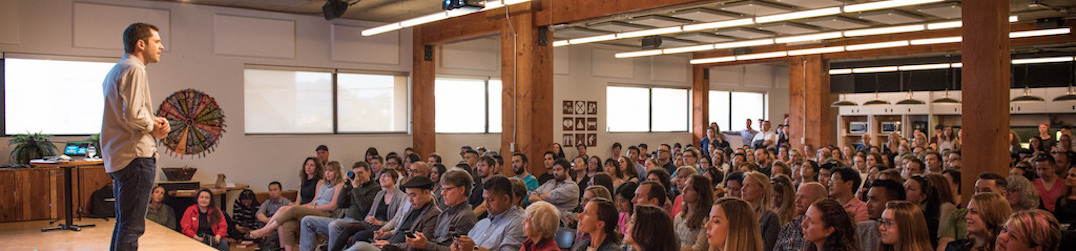
today I'm in Detroit, Michigan. Excited to speak to a group of side hustlers tonight. And if you're not listening in real time, well, I was in Detroit. And fortunately, the seasons and stories of the show are meant to be time independent. Is that a word? I
just kind of made that up. Maybe the better word is evergreen. What I mean is you might be listening to this a month after I recorded or even a year after. And hopefully the majority of what you hear is going to be something you can still apply. That is my goal at least.
And today we're talking about coffee. Now, coffee is a need for a lot of people. It's not just a want, it's something we need. And I've done a lot of traveling and living overseas. And people sometimes ask like, is there anything universal about every culture? Well, there's
not much, but I will say that coffee or tea or both is pretty much widely available just about anywhere you go in the world. Eastern cultures, Western cultures, throughout the continent of Africa, there's different kinds, different preferences, it's served in different ways. But pretty much throughout the world, one way or another, everyone loves to get their coffee on or their tea, but personally, I'm partial to coffee. In any case, we need to be fueled up. So it's perhaps not surprising that we have a number of side hustle stories about people meeting this need. Today is another one. It's about a coffee lover who bets his
beans on workplace coffee subscriptions. And that story is coming right up. Ben Martinez was the vice president of HR for a high performing tech company in Salt Lake City, Utah. His strategies led to a large amount of growth in the company. His team was succeeding. And overall, he was becoming well respected in his field. But still something
wasn't quite right. After 20 years in corporate America, Ben was struggling to feel that same acceleration he was once familiar with. He slowly found himself less engaged in his day job and more fascinated by one of his passions. What was that passion? It was coffee. Delicious,
fresh coffee. Ben was in the business of recruiting. He had made quite a few connections over the years. He'd also been very public about his coffee passion on various social media channels. He loved to publish images and videos of coffee shops he visited on his travels, as well as his own brewing equipment, to his audience of 20,000 followers stretched across Snapchat, Instagram and Facebook accounts. Ben was hoping to try something new, so he began to brainstorm
on a way to combine his love for great coffee and his business savviness. In Salt Lake City, he hadn't come as far as it had in other cities. Many of Utah's businesses and startups were forced to get their caffeine fixes from K-cups or Folgers, the horror, neither of which sat well with Ben, who had developed a love of good coffee after going to college out of state. He had noticed that coffee in the workplace was often ordered as an add-on, alongside printer paper and staples and envelopes, by office managers who just didn't drink coffee. Ben was floored. How could anyone be expected to do their best work when the coffee was
flavorless and stale? But even if the underwhelming quality of that coffee was addressed, there was still the bigger challenge where to find better coffee. That's when he thought, what if he could create a quality-centric coffee subscription for workplaces that was not only affordable but also easy to get? With this model, not only could he satisfy the business needs, it would keep their employees positively swimming in freshly roasted high-quality beans, but also thanks to the subscription model, he would have a predictable cash flow each month. Ben thought it was a dream worth pursuing, so he bought a small home coffee roaster and began to teach himself how to roast green coffee beans. After reading a helpful book
called The World Atlas of Coffee, he was able to make some progress, but it wasn't as simple as he'd hoped. In fact, he found it was actually pretty difficult to roast consistently from batch to batch when you're working with upwards of 50 to 100 pounds of green coffee beans. He finally realized he would need the help of a professional, so he started reaching out to private roasters about a partnership. Unfortunately, several of the coffee roasters Ben reached out to didn't understand his goal to target workplaces. A few of them just said no, or they weren't willing to offer any kind of wholesale discount. But finally,
Ben found a small roaster who shared his vision for fresh quality beans delivered as quickly as possible. With that vision and his roasting partner, Ben was ready to start building his subscription business Sumado Coffee. The Japanese word "Sumado" can be interpreted as smart, stylish, or slim. For Ben, it captured his intentional, thoughtful approach to providing great coffee to workplaces. The next obstacle was shipping. Coffee beans
have only 14 days of peak freshness before the flavors begin to rapidly decay. And since one of the greatest value points was getting freshly roasted coffee to his customers quickly, he had to create a seamless, quick shipping solution. He went looking for some software to help with shipping, and you'll never guess the name of what he found. He found a program called "shipping software" to get his coffee from point A to point B. In some ways that name "shipping software" you're like, "Come on guys, can't you think of something more creative than that?" But I suppose in other ways it's perfect because it explains exactly what it does. Anyway, the shipping software platform systemized
ordering, printing, labels, and costs, but more importantly they connected his orders to the roaster system, allowing Sumado to roast coffee to order and ship it out all in under 48 hours. He also used a few other tools that I'll link up for you on the show notes page if you're curious. One of them was an app called Recharge to manage his subscription customers. He also used Buffer to streamline social media management. And MailChimp, which you've probably heard of, to boost his email marketing efforts. Things were starting to
come together. In the developmental stages of Sumado Coffee, Ben had utilized his social media following to essentially test it out and to generate pre-orders. People were really interested in what he was building, and before he knew it he had around 100 pre-orders. Now even with that nice batch of pre-orders in place, the launch date for Sumado Coffee was tentative. He wanted to make sure things were ready before he started shipping, using that great shipping software program. But then a large local tech company called Artemis Health
reached out to Ben for a large order of 70 bags of coffee for 70 different businesses. And unlike his other pre-order customers, Artemis Health wanted this order ASAP. This large order gave Ben the push he needed to launch. He knew that if he could get all those individual orders out to each of the 70 locations as quickly as he promised, he could do anything. The launch date arrived, which was June 1st, 2017, and with the help of his handy new resources, the partnership with the roaster, and a generous supply of his own product, all of the bags were shipped within that tight 48-hour window. And within another 48 hours, all of the bags
had been received at the correct locations. This challenging pre-order was a success. Artemis Health was happy too. They were so happy that they ordered another 50 bags two weeks later and have ordered 300 bags of coffee from Ben to date. Ben has continued to grow Sumado Coffee with organic social media use, but here's a good lesson for you of something that didn't go well. In an attempt to streamline the process, Ben began using an automated
Instagram engagement tool that he thought was a good idea. That tool would go out and like a bunch of people's posts and make automated comments. And it did bring in some customers, but most of the comments posted by the bot were placed on completely irrelevant posts, or the comments themselves were completely irrelevant. It felt inauthentic and so Ben turned it off. He realized that for the most part, social media marketing needs to be personal, needs to be consistent, and you really shouldn't hire a bot to do your work for you. And here's
a better idea he had. He also opened up orders to employees who were enjoying their coffee at the workplace so much that they wanted to bring it home. At the time of our recording, Sumado Coffee is just a few months old. It's already generating over $1,500 a month in revenue with more than $600 a month in profit. Now that's recurring revenue, meaning that he can count on it each month as he continues to grow the business. And it also doesn't
account for any one-off sales like from those employees who are ordering. He's focused on the recurring business though, because he understands it's really great to know how much money is coming in each month. Those commitments in the form of recurring orders continue to arrive, and Ben feels confident that Sumado Coffee will continue to grow and thrive. All right, lots of good lessons here. I really like how Ben focused on the workplace market, specifically identifying a need for employees who are sometimes underserved by somebody ordering coffee who doesn't drink coffee. You're probably not going to find the best
coffee at Office Depot or Office Max or Staples, but some office managers probably can't be bothered or just aren't motivated in seeking out something better. So he's trying to make it simple and say, "Here's something better for your employees. It's not going to cost you that much, and I've got this great shipping software, which is going to make it really simple on my end." This episode reminds me of another one that we've had recently. I forget the number, but I'll link it up on the show notes page about a guy in England who had a similar issue. And there in his workplace, they were using this espresso machine that had pods like Nespresso pods or capsules, and he felt that that product wasn't serving people well. So he found a
way to import different pods from Australia and has actually turned that into quite a big business, like more than several thousand dollars a month at this point. So as I said, coffee is a need for a lot of people. And just because there's a lot of coffee providers already doesn't mean that there's another creative way to think about it or just a different group of people to be served. Also, for everybody who's hoping to grow their business using social media, do take note of that lesson he learned. I think it's totally okay to schedule your posts and use different tools to be more efficient, but using a bot to go around and post fake comments on people's posts, not such a great idea. Like he said, he was able to bring in some customers, but
it just felt inauthentic. So congrats to Sumado Coffee. Only a few months in, already building that recurring revenue source. I would love to check back in in a few months and see how it's going. So, Ben, let this be a challenge to you. Side Hustle School would love an update at some point. And for
all of our listeners, I hope you like this story. Inspiration is good, but inspiration with action is better. Today's show notes, including links to all those different things I mentioned are at sidehustleschool.com/306. That's a wrap for today. I'm Chris Guillebeau for Side Hustle School.