711 6:50

Educator Makes Cards to Teach Kids About Emotions

Don’t take a time-out … take a time-in! Recognizing the struggle parents have with teaching kids how to handle emotions, a mom and educator creates a game to solve the problem.

6:50

Subscribe Now For A Free Five Step Tutorial

Get a free five-part email course that shows you how to find, validate, and launch your side hustle idea — no experience required.

What It's About

An educator teaches mindfulness to the next generation.

Business Model
Product
Skills Required
Communication & Empathy
Complexity
Medium
Profit Potential
High

Words of Wisdom

According to Suzanne, her "motto through it all has been 'less hustle more grace'... and keeping my eye to the quality of my life rather than the biz performance. My kids are still home, and I could speak a lot to the pressures of balancing things."

Fun Fact

As I'm sure you already know, shopping for toys and games on the internet has consistently been on the rise since 2008. In 2016, almost 44 million US consumers shopped for toys or games online!

Notes from Chris

Episode 711
Any parent can relate to the feeling of helplessness when dealing with a child having a meltdown. The crying, possibly screaming, and maybe even kicking and hitting. What do you do? You want to raise kids that can deal with their emotions in a healthy manner. But becoming a parent doesn’t come with a handbook. Learning to teach kids social skills and manage their emotions is one of the biggest challenges of parenthood.

Suzanne Tucker is a parent educator, physical therapist, and mom. She noticed a lot of her parenting class graduates were asking for help in connecting with their children, especially when stressed. Suzanne realized this was an opportunity to help other parents connect with their kids through daily play. She wanted to create a fun way to learn because she knew kids are especially receptive to learning through creative play. So she decided to make a game, called PeaceMakers Mindfulness cards, to do just that.

Each of the cards in a deck of PeaceMakers has a positive message meant to spark conversation between adult and child. The cards are especially appealing to kids due to the colors and animals that represent themes, such as balance, love, and forgiveness.

Suzanne decided to start a Kickstarter campaign to raise funds to produce her PeaceMaker cards. In about one month, she raised $8,000—twice her goal! For Suzanne, the experience validated her idea. She wasn’t an influencer; she just wanted to make a difference.

From its start in 2016, PeaceMaker monthly sales averaged about $1,000. The first BIG jump in sales was in the holiday season of that year—with monthly sales going to $10,000! Suzanne attributes this increase not only to holiday shopping but also due to a great article published in the Philly Voice at that time. PeaceMakers Mindfulness cards were her only product at the time, and the piece included a direct link to purchase the cards.

Sales grew from there. Once she had three months in a row of $10,000 in sales, she put her energy into creating a second product, the Time-In Toolkit, an alternative to time-outs and behavioral charts that helps teach children emotional regulation.

By early 2018, Suzanne had named her company Generation Mindful, or GenM. (At first it was just that one product.) The company was growing so fast, she started to hire more help, including a marketer and content creators. However, another lesson here: she ended up taking back much of this work to keep the voice and brand of Generation Mindful intact. The company has a very distinct—and hard to copy—brand and voice. This has been the brands’s greatest struggle, but it is also one of their greatest assets.

Earlier this fall, GenM ran their latest Kickstarter campaign for a third product, SnuggleBuddies. They raised $35,000 in 2 weeks. From the initial $1,000/month, to the $10,000/month boost and then back again before restructuring and working smarter, Suzanne now expects the company to hit seven figures in revenue in 2019.

Another of Suzanne’s goals for 2019 is to create more products. She also wants to translate her products into Spanish and then French. Through her tools, toys, and programs, she wants to “make connection a habit so that together we can raise an emotionally healthy world.” One year ago, she transitioned to working full-time on Generation Mindful.

MENTIONED IN THIS EPISODE:
  • Generation Mindful: Interested in learning more about Suzanne's products and how you can help your chilren process their emotions? Head on over to her website!
  • Kickstarter | Time-In ToolKit & SnuggleBuddies: Here are some Kickstarter campaigns that Suzanne launched for a couple of her products

SEE ALSO: Inspiration is good; inspiration combined with action is better. Now get back to work!

Yours in the revolution,

cg-sig-newsletter
Quote of the Day
"Mostly when I talk about life balance as a CEO/mom I like to blow up the myth that you can have it all. Ummm, no—something’s got to give, it's just what is going to give, when, and on what day. I say no to (some) things so that I can say yes to other things. And I am constantly letting go of the unicorn that is being ‘perfect’. That myth will kill ya."
—Suzanne Tucker #SideHustleSchool
Read the full transcript

This transcript was generated from the episode audio and may contain minor errors.

[Music]

Hey, what's up friends, listeners, and welcome to "Side Hustle School". It's Chris Guillebeau here with you. Got a great story for all of our listeners who are parents out there today. And if you're not a parent, you can learn from this too. Here is the opening question.

When your kid has a meltdown, what do you do? And you know, if you don't have kids, just imagine that you did. What would you do if your kid has a meltdown? Would you call 911? Would you tell them to eat a giant cookie?

Or would you just tell them to get over themselves? Because you know, it's not all about them. In life, there's other people out there. Okay, to be fair, I'm not sure any of those options are optimal. Those are the first three things I thought of.

But what do I know? I have a cat, she doesn't listen to me. So let's just focus on the story itself. Recognizing the struggle parents have with teaching kids how to handle emotions, a mom and educator creates a game to solve the problem, all while having fun and of course, getting paid. After experiencing rapid growth, she then transitions to doing it full-time.

What started as a very part-time side hustle is almost a seven-figure business after just a couple of years. I am always excited when I hear about our listeners who have started something really spectacular. We're calling this one educator makes playing cards to teach kids about emotions. So try to regulate your emotions while we have a quick thank you to our sponsor and then I'll tell you all about it. [Music]

Most parents can relate to the feeling of helplessness when dealing with a child having a meltdown.

The crying, possibly screaming, maybe even kicking and hitting. What do you do? You want to raise kids that can deal with their emotions in a healthy manner. But becoming a parent doesn't come with a handbook. Learning to teach kids social skills and manage their emotions is one of the biggest challenges.

Introducing Suzanne Tucker. Suzanne is a parent educator, physical therapist and also a mom herself. She noticed a lot of her parenting class graduates were asking for help in connecting with their kids, especially when their kids were stressed. Suzanne realized this was an opportunity to help other parents connect with their kids through daily play. She wanted to make a fun way to learn because she knew kids are especially receptive to learning through creative play.

So she decided to make a game called Peacemaker's Mindfulness Cards to do just that. Each of the cards in a deck of peacemakers has a positive message meant to spark conversation between adult and child. The cards are especially appealing to kids due to the colors and animals that represent themes. Those themes include topics like balance, love and forgiveness. I noticed that Giant Cookies wasn't on that list, but perhaps in a future edition.

Suzanne decided to start a Kickstarter campaign to raise funds to produce these Peacemaker cards. In about one month, she raised $8,000, twice her goal. For her, the experience validated the idea. She wasn't an influencer, she wasn't famous, she just wanted to make a difference. From the beginning in 2016, Peacemaker monthly sales averaged about $1,000.

The first big jump was in the holiday season that year when monthly sales went to $10,000. Suzanne attributes this increase to a great article published in the Philly Voice. Peacemaker's Mindfulness Cards were her only product at the time, and that piece included a direct link to purchase. Sales grew from there, at least at first. Pay attention, this is really good.

Once she had three months in a row of $10,000 in sales, she put her energy into creating a second product. That product was the Time In Toolkit, an alternative to timeouts and behavioral charts that helps teach children emotional regulation. I just made a note that I should order one of those for myself. She also focused on building systems to allow her new company to scale. So again, listen, during this time, which lasted about six months, her sales decreased to around $2,000 a month.

So she's been having $10,000 a month in sales, now she just has $2,000 a month, but Suzanne says she had her eye on the long game. She committed to putting her energies into growing the company. After raising $40,000 on Kickstarter in just three weeks for the second product line, the tide turned. After the campaign, they raised another $60,000 in pre-sales by the time the product line was finished in December 2017. Now I used the word company there, but at first there was just one product.

So by early 2018, Suzanne had actually named the company Generation Mindful, or Gen M. And things were growing so fast, she began to hire more help, including a marketer and content creators. However, another lesson here, she ended up taking back much of this work herself to keep the voice and brand of Generation Mindful intact. The company has a very distinct and hard to copy brand and voice. It's difficult for other people to learn, but it's also one of their greatest assets.

Earlier this fall, Gen M ran their latest Kickstarter campaign for a third product, Snuggle Buddies. This time they raised $35,000 in just two weeks. So overall, from the initial $1,000 a month to that $10,000 a month boost, and then slowing back down again before restructuring and working smarter, Suzanne now expects the company to hit seven figures in revenue in 2019. And her other plans for Gen M are equally ambitious. The company wants to introduce a B2B model.

They currently only sell direct to consumers, but they wanna start selling to schools and daycare centers. And to make this happen, she's doing a lot of networking. She eventually met a consultant with decades of experience working for a company that sold direct to schools. With this consultant's guidance, they're establishing a plan to sell directly to private schools. And then from there, they'll move on to public schools.

This is also a long game play. It's not gonna happen all at once, but it has real potential. And in fact, their first pilot program has started in a St. Louis inner city elementary school. Another of Suzanne's goals for 2019 is to create more products.

She also wants to translate those products into Spanish and French. She's now working full-time on Generation Mindful. And through her tools, toys and programs, she wants to make connection a habit so that together we can raise an emotionally healthy world. [Music]

Awesome, congratulations, Suzanne. I love this project and I love how much of a success it has become.

That's so fantastic. Suzanne has this little motto that she shared with us. And she said, especially during the first six to 12 months, my motto was less hustle, more grace. And keeping my eye on the quality of my life more than the business performance. And she also notes that her own kids are still young and at home.

So less hustle, more grace. I totally get that, totally respect it. I think sometimes from the outside, people might think about the word hustle and think, oh, it's just like working hard all the time. Just kind of nonstop, not really putting your head up to kind of look around and look at the bigger picture. But the way that I think about it, it really is about mindfulness and intentionality and building something for yourself for sure, but doing it in a way that works for you.

So of course, as always, it has to work for you. So I suppose I could have called it Side Hustle School, but that didn't sound as good. So just consider it a semantics thing. Also on a practical note, I was taking a look at their website. Website looks great, really, really nice.

I do notice that on the products page, some products are selling more than others. At least it appears to be that way just based on the reviews and how some of it is written. Now that's totally normal. When you have a product-based business, naturally some products are gonna sell more than others. If there is a really big discrepancy though, I think the best solution after you've tested it a bit, after you've kind of put it out and seen how people respond, if something really isn't selling that well, I just suggest removing it.

I just suggest instead of keeping it there forever, you just take it off and say, you know what? We thought this would be a big hit, but it wasn't. So that's okay. Gonna focus on the stuff that is. And sometimes in retrospect, you can look back and you can identify and say, oh, you know what?

Now I understand why that didn't hit the way I thought it would. And sometimes you can't. Like sometimes there's just a complete mystery to those things. So that's why I think the best solution is to just not worry about those things, but don't try to have like an incredibly extensive catalog that consists of some products that don't sell very well. She has clearly got a few winners, so I would focus more on those.

Just my two cents. And of course she's almost got seven figures in revenue, so she doesn't need my two cents. Again, good work. And listeners, thank you so much for joining me. I hope you enjoyed this lesson.

As always, remember, inspiration is good, but inspiration with action is better. Suzanne took action a couple of years ago, and now she's got this fabulous project that's helping all kinds of people, and of course helping her at the same time. And these are not opposing values. If you would like to check it out for yourself, just come and see the show notes for today's episode. Those are at sidehustleschool.com/711, 7-1-1.

I'll be back again tomorrow with another story. Be sure you're subscribed. Once again, my name is Chris Guillebeau, and this is the Side Hustle School. See, I tried it, but it doesn't sound quite right. So let's stick with Side Hustle School.

Find your side hustle

Search 450 real case studies by income, difficulty, and business model. The Side Hustle Finder helps you skip the browsing and find ideas that actually match your situation.

Explore the Finder →
Side Hustle book
From the Host

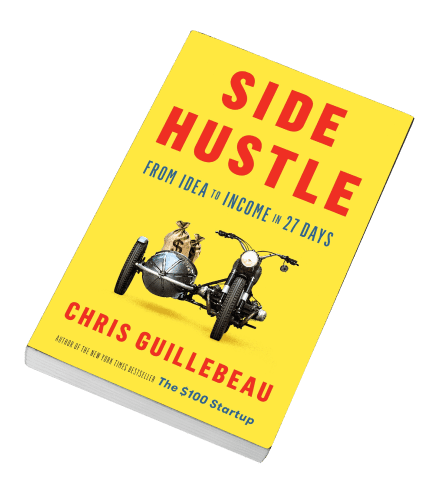
Side Hustle: From Idea to Income in 27 Days

The step-by-step guide behind many of the stories on this show. Find your idea, validate it, and start earning — no experience required.

See all books →

Keep in Touch

Chris Guillebeau speaking to a packed crowd

There's a new story every single day on Side Hustle School. Episodes are produced to be short and to the point — I know you're busy. Be sure you subscribe to get a weekly recap of each episode!

Email hello@chrisguillebeau.com
Say Hi From your favorite airport

To infinity and beyond,
Chris Guillebeau