This transcript was generated from the episode audio and may contain minor errors.
[Music]
Hey, Side Hustle School listeners. It's Chris Guillebeau. Welcome. This is the weekly recap for week number 42. Over here in my part of the world, I just finished visiting Canada.
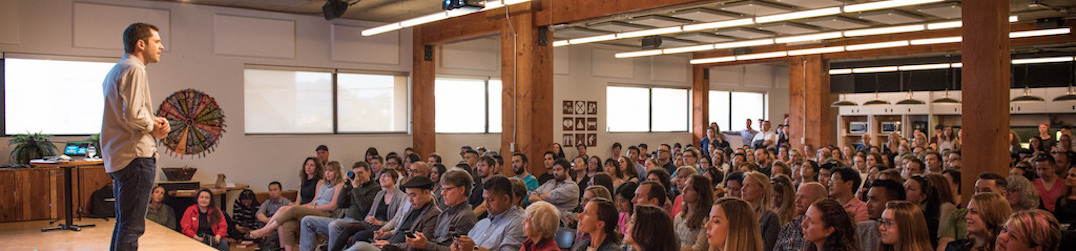
I was in four cities there last week. Next week, I'm going to Salt Lake City, Austin, and Dallas. Much more is coming up with that. If you'd like to follow along or see where I'm going, come out and say hi. Just come by sidehustleschool.com/tour.
I've got a lot to talk about today. I want to begin with some more comments about yesterday's story. Yesterday was the German designer who's found a way to create these little kits that people can use to make websites. And I believe they're meant to be kind of a happy medium between doing custom design work for someone or just kind of sending them off to figure it out themselves. And in doing so, she's helping to serve designers and consumers, especially side hustlers, people just getting started who don't have a lot to spend.
Now, I mentioned yesterday that this is kind of a changing industry. And I said something like, if your industry is changing, you can choose to resist that and fight against it, or you can choose to adapt, even if it's not your preference. Even if you say, you know what? I liked it the way it was before, but it's not all about me. If I'm going to offer something for sale, I have to understand what people want.
And even though change is hard sometimes, I really do think it's going to be much easier, at least for most people in most industries, to pay attention to what's going on and understand that they can't do things the same way all the time. Now, I know this can sometimes be personal for people. If you're a web designer, you might very well say, I'm only going to take clients with good budgets, and I'm just not going to worry about that trend of low-cost design. Now, in this case, there are still people in companies who have more budget for design. So yes, you can choose to focus on those opportunities.
But what Anya has done, the person we featured yesterday, is just kind of recognizing that for a whole lot of other people, they're looking for a different solution. And she and her team are trying to find a way to use their creative skills to meet that solution, but of course, still get paid themselves. Imagine if you were a payphone repairman, or a repair person, and you had spent your whole career mastering the art and science of payphones. And you were really passionate about payphones. Like you got really excited when you walked down the street and saw one, which probably only happens like twice a year now because most of them don't exist anymore.
In this case, you could still say, I am the payphone expert. Even though there are far fewer payphones, nobody cares about them anymore. I'm going to take a stand and hold my ground. Like how do you think that would work out? Compared to someone who said, you know what, I spent my career learning about payphones.
I could see 20 years ago, 15 years ago that the world was changing. The vast majority of people have no need for this product at all. So how can I adapt to this? And what are people doing now? So I have the skill of payphones, but do I also have telecommunication skills in general?
Like what have I learned about this industry that could be applied in a different way? Do I have repair skills in general? Do I have knowledge about this industry that could somehow be helpful in a different industry? There's probably all kinds of things you could do as that passionate payphone person, but refusing to change would most likely be the least successful. So whether in that example or something else, not only do you have to adapt, which I think is a reality in the world we live in, but often by adapting, you'll find an all new way of making money.
And I think this comes through in a bunch of stories, not just yesterday's, but yesterday's was very overt, so I wanted to call it out. All right, now moving along, I've been getting a lot of emails and voicemails from listeners. Thank you so much for all the feedback, comments, questions, and sharing your own side hustle stories. I particularly love hearing stories of listeners who are taking action. Got a note from Sean Binniston this week.
He says, "I'm a big fan. I find your advice along with the experience of others very motivating. So I did it. I made my first sample purchase of a product sourced from China to be sold on Amazon. There's lots of work ahead to make it profitable, but I'm ready for it.
I have a plan. My goal is to bring in an extra $2,500 a month in six months, then we'll see where I'm at. Thanks again, and I hope to see you when you come to my city." Awesome, congratulations, Sean. Definitely let us know what happens along the way. And if you're a listener who's working on a project, especially since side hustle school has started, please do let me know.
You can send me a note at podcast@sidehustleschool.com just right in from the website or call the Hustle Hotline 8449 Hustle. That's 844-948-7853. And you can leave a quick little message there. I'm gonna play one of those voicemails from a listener who has a question. But first, I wanna do a quick shout out to Jan Silloway's high school class in Eau Claire, Wisconsin.
And Jan writes in from there to say, "I'm a teacher at an alternative school "for high school seniors. "Many of these kids struggle to pay for extras "and haven't had entrepreneurial role models. "I recently started listening to side hustle school "and have introduced it to my class. "I could almost see the wheels come off "and the ideas started flowing. "We're now reading the book together "and we'll be incorporating the plan into our class." I love that, thank you, Jan or Ms. Silloway.
And I hope the book or the show is helpful to you guys in that class. I also had a challenging adolescence, not the greatest high school experience. So I'll be thinking of you as I make the show. All right, let's hear from a listener. I believe we have a message from Taryn.
- Hello, Chris. My name is Taryn and I'm calling from the Atlanta, Georgia area. I have been a fan of the show ever since I happened upon it. I can't even remember how. And I've listened to all past episodes and I listen daily any chance I get or catch up on the weekends if I miss a show.
Congratulations on the book. And I have a question for you. I wanna know what are your suggestions for monetizing a blog from day one? I had a blog in the past. So this time around I'm thinking about doing an advice blog from the perspective of someone who's inside the property management world and giving advice to potential renters for apartments and single family homes.
And so my question to you is, how do I make this particular project more profitable and sooner than the last? I noticed there are some people who have turned in stories or who you've done interviews with who had success right away. And then we had some that, you know, it took years or more to get to where they were profitable. And I wanted to know what your observations were, what the difference between those folks, what approaches that they take to get them to profitability quicker versus the ones that took a while to get there. And I look forward to your answer.
And again, congratulations on the book. - Taryn, thank you so much for the question. I think we may have actually had a chance to discuss this very recently when I was in Atlanta. I think for a project like this, it's best to start with the need and then figure out what is the format? What is the product?
What is the service? In other words, how do you get paid? And those questions tend to lead you to what is the best format, whether it is a blog or something else. So in this case in particular, we can think, okay, there's a clear need here, specific population that's looking for housing. I think we may have discussed this separately in Atlanta.
I believe you said that some people make common mistakes. There's some simple things they can do to be more successful in their search. And I also think we talked about the idea that there's essentially two markets here. So there are these people who are looking for apartments and there are also developers and apartment complex managers, anybody who's on the other side, because they also want to make sure they get responsible renters, people who are gonna pay their bills on time and take care of the place. And so I almost think it's good to think about the whole picture there.
I wonder if the revenue model might be more closely related to those developers or the people running the apartment complexes, like a lot of those places can pay for referrals. And sometimes they have a formal program for that. If not, I wonder if some of them would be open to it. And presumably that fee would be significant. If you're referring somebody to an apartment and they sign a year-long lease, I don't know exactly what it would be in your market, but I would imagine it's at least a few hundred dollars.
And the other side of educating people and helping them go through the process of finding the right apartment, there's a couple of different approaches there. You could either just provide all that information for free and your money is on the referral or the backend or whatever else it is. Or it's also the kind of thing that I think does still make for a good information product. The kind of thing where if someone is searching for an apartment and they have some limited parameters, but here's this guide that I can purchase for $30 or $50 or whatever, it's basically gonna tell me exactly what to do. 'Cause first of all, that person's gonna save time.
Second, they're gonna save money. And third, you might be able to get them in a better place or in a place sooner or some other benefit or advantage. So there's some value to that too. And of course you could do both. You could have an ebook that you sell or some other information products and also some kind of referral commission.
There are probably some other models too, but those are the first things that I thought of when you told me this story. So good luck. Thank you for your kind words. The next time I come to Atlanta, I'll look for an update. [Music]
All right, looking back on this week, we had a selection of six very different stories.
Just gonna do a couple of highlights. Episode 289 was the marketer who creates a six figure subscription box empire. As mentioned in that episode, his revenue model is recurring revenue, meaning that he's getting paid the same amount each month from each customer and customers are committed for the longterm. So it's very predictable from month to month, how much money he's gonna make. Not every project is gonna work like that, but it's great when it happens.
If you have a choice between doing recurring revenue or something else, well, it might be obvious which is better. Next episode was about a sneaker fan who flips shoes for $1,000 a month profit. He actually starts this as a teenager and he's still doing it on the side many years later. That one's for everybody out there who really likes reselling. A lot of folks are into that.
Episode 291, flesh eating beetles work for free, earn Oregon woman $3,000 a month. I mean, I think that headline speaks for itself, but of course you should hear the episode. Just wanna remind you, we can only hear things like this on side hustle school. Like where else in the world are you gonna get a story like that? And this reminds me, I was looking through our upcoming schedule.
We have another story coming up from a different woman, a high school science teacher who earns a couple of thousand dollars a month removing frogs from people's homes. Okay, so just wait for it. This is also something that I wouldn't wanna do myself, just to be clear, but more power to her. And that story will be coming out in a couple of weeks. Episode 292, artist turns daily commute into $5,000 a month side hustle.
And she does this by paying attention to the art in the wealthy homes where she bartended. And in this story, to go back to where we started, you can see that she is also willing to adjust and adapt. And that's why she's now making real money from her paintings. Episode 293, a travel blogger gets paid via Pinterest and guidebooks. I almost wanted to call it travel blogger actually gets paid 'cause most of them don't, but I'm glad she's found a way.
And then yesterday as discussed, the German agency that helps designers work less and make more. So looking ahead to what's coming up on the show, it's not just the frog story, although that of course is awesome. We've got a story about a drummer who records his drum lessons and then turns them into a six figure podcast. How about that? A guy in Minnesota who makes $70,000 teaching people about wine, and a floral arranger who skill and passion blossoms into a budding side hustle.
By the way, coming out soon, we also have an extended cut on marketing your book or creative project. Once a month, I do a little bit longer episode focused on a specific topic. And that's different than the daily format. The last one was about getting a book deal. It turned into a two part series.
The next one is the second half on marketing your book or your creative project. All of that is coming up. Stay tuned, keep listening to the show. Be sure you're subscribed so that you'll get notifications about the episodes right away. Now, before we close things out, I wanna say thank you to some folks.
Like I said, this is week 42 come so far, so far to go. Side hustle school was recorded on location in Canada this week. It is then transported to Brooklyn, New York and Washington, DC at the Panoply Studios. Just to be clear, no flesh eating beetles were harmed in the making of this episode. My production team is led by AC Valdez.
It also features a Delia Rubin show notes by Whitney Karinek. Thank you so much guys. And this week I tried to bring back some timbits from Tim Hortons for Libby, the side hustling cat. But unfortunately they don't have a cat food flavor. They pretty much just have glazed, chocolate, honey dip, et cetera.
Maybe next time. [Music]
This show is part of the Onward Project led by Gretchen Rubin, host of her own very popular podcast, Happier. Be sure you subscribe to that as well. And last but not least, my final shout out is to you, the listener, because you are a rock star. You are the reason I make this show.
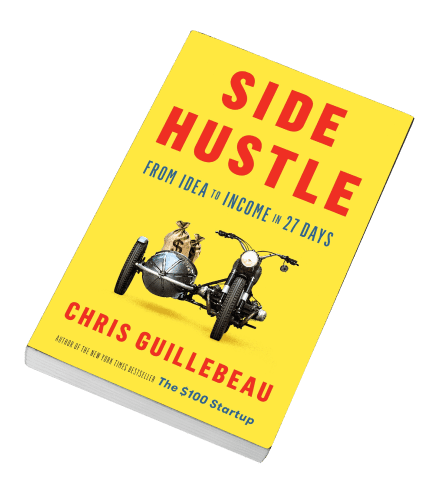
All year long, every single day I've been making this show with the intention that if you make the commitment to make this part of your routine, I too commit to supporting you fully in your quest to create that new source of income. That thing you know you need, that idea that you've thought about for a while but haven't done anything about or just that general concept you believe in. The idea that it would be good to create more security for yourself if only you had a plan. The side hustle book is a major part of that plan. It's called From Idea to Income in 27 Days.
You can get it at any bookstore or online at Amazon, Barnes and Noble, iBooks, Audible, wherever you like to buy books. Speaking of that, if you've read the book, I'd be very grateful if you'd leave a quick little review of it. And the easiest place to do that is on Amazon.com. Just go there and search side hustle, you'll see it. But of course you could also leave a review on iBooks or Goodreads or wherever you prefer.
Wherever you do it, if you choose to do it, I appreciate it. All right, that's a wrap for today and this week. In every episode, I say that inspiration is good but action is better. It's because I want you to take action. I wanna get more emails from people who are starting projects.
I wanna hear what you're doing. I wanna cheer you on, but not just be your cheerleader. I'll also hopefully provide you some practical support so that you know which direction to take and how to spend your limited time. Because you're busy, I respect that. Because you're busy, I'm gonna sign off, but I'll be back tomorrow.
Episodes go online at 601 a.m. Eastern time every day. I hope you'll join me for those. I'm Chris Guillebeau for Side Hustle School. [Music]