1050 6:55

Retail Frustrations Inspire Upcycled Fashion Brand

A fashion designer turns a $20 sewing machine and donated denim into upcycled pieces—without sacrificing style for ethics.

6:55

Subscribe Now For A Free Five Step Tutorial

Get a free five-part email course that shows you how to find, validate, and launch your side hustle idea — no experience required.

What It's About

A designer adds new life to old materials, creating fashionable, upcycled bags.

Business Model
Product
Skills Required
Sewing & Marketing
Complexity
Low
Profit Potential
Medium

Words of Wisdom

Lucia knows that this intentional work to upcycle is challenging and counter-cultural; "I think it's very important to know exactly why you're doing what you're doing and how that would benefit other people's lives."

Fun Fact

Lucia’s first real business investment was her first sewing machine, which she snagged for $20 at a thrift shop. And that’s it!

Notes from Chris

Episode 1050
For years, Lucia Gasparidesova knew she wanted to have her own fashion brand. She studied Fashion Design in college and worked for a well-known British clothing brand. Free time was spent sketching her own designs, and she even designed an initial collection of three outfits to present to buyers.

But there were some problems bringing it to market.

The first was cost. It cost her $500 to buy materials to produce samples, mostly to show what she could do. That wouldn’t buy anything she could actually sell, and that well-known British clothing brand she worked for didn’t pay her very well.

The second involved the fashion industry itself. The more Lucia researched, the more disillusioned she grew. The thought that the clothes she helped sell might be made in sweatshops made her shudder. Not to mention the impact all these clothes were having on the planet.

She had to do something about it. So she applied an old family saying to the problem: "Use what you have."

By then, Lucia had come across the concept of upcycling. Upcycling is all about taking old items and repurposing them to create new pieces. Upcycled clothes can be made of anything from scarves to shirts, sweaters, and pants.

However, Lucia didn't like the way most of these pieces were put together. They looked homemade. It was as though the mission of being environmentally-friendly had to come at the cost of the actual design.

That’s when she began a set of experiments. It was half a moral undertaking, and half practical. Since she didn't have the money to invest in her next collection, she got creative. She asked for donations of old jeans, guessing that most people had at least one pair kicking around their closet that they never wore.

And she was right.

Armed with her locally-sourced fabric—and a sewing machine she snagged for $20 at a thrift store—she got to work. Lucia spent about a year and a half experimenting with different methods and styles. 

But she still didn’t like how it turned out. Even with her fashion design training, the pieces once again looked like they’d been upcycled. You could almost point to what each piece of fabric had once been. And that wasn’t the point.

Everything changed when Lucia started making tote bags. In retrospect, it made perfect sense. Tote bags sit at that perfect intersection of timeless and trendy, meaning just about everybody has one. But most modern tote bags were not designed for extended, sustainable use. They're often made from cheap cotton, and they're not stitched to last. But denim? That stuff is designed to be tough.

As a bonus: Lucia knew that denim went with just about any outfit.

She made her tote bags as custom pieces, and she sold them to friends and acquaintances. She did some marketing through organic social media posts, but mostly she relied on people she knew.

Within a year, she wanted to expand. She hoped to undo some of the damage the industry was causing, instead of contributing to it.

She called her business PROLONG, based on the idea that existing items of clothing, which are no longer in use, can be transformed into completely new products.

Lucia now works part-time at a local co-op vegan cafe. The rest of her time is spent sourcing fabrics and designing new products. Plans for the future include moving into a new studio, where she can work on turning Prolong—and saving the planet—into her full-time job.


MENTIONED IN THIS EPISODE:
  • PROLONG: checkout Lucia's current upcycled bag offerings on the PROLONG website.
  • Big Cartel: is the e-commerce platform (for makers and artists) Lucia uses to sell her bags.
 

SEE ALSO: Inspiration is good; inspiration combined with action is better. Now get back to work!

Yours in the revolution,

cg-sig-newsletter
Quote of the Day
"I've been pricing my products in the wrong way. I thought that my budgeting was correct but actually I never counted my time in it as I thought that is such a luxury to be paid for my time as well."
—Lucia Gasparidesova #SideHustleSchool
Read the full transcript

This transcript was generated from the episode audio and may contain minor errors.

[Music]

What's up, friends? Welcome to Side Hustle School. This is Chris Guillebeau. Today, we're gonna talk a bit about upcycling. Upcycling, which is kind of like recycling, except, you know, bigger and better.

We'll hear about it in the episode. It's all about the process of transforming byproducts, waste materials, other stuff into new materials or products of better quality. Now, of course, we're gonna look at this through the lens of a side hustle, an income-generating project. And in today's story, disillusioned with the fashion industry, this designer turns to upcycled fashion to pursue her dream of creating ethical, sustainable pieces without sacrificing looks and panache. By the way, panache is a fun word, but I'll be honest with you, I had to look it up to make sure I was saying it correctly, and I am.

Panache. Startup costs were just a few hundred dollars and a $20 sewing machine. She is now making backpacks, tote bags, and more. It's upcycled fashion with style. And I'll bring that story to you right after this.

Shout out to our sponsor. Thanks, sponsor. [Music]

For years, Lucia Gaspara de Sova knew she wanted to have her own fashion brand. She studied fashion design in college and worked for a well-known British clothing brand. Her free time was spent sketching her own designs and she even made an initial collection of three outfits to present to buyers.

But there were some problems bringing it to market. The first was cost. It cost her $500 to buy materials to produce samples, mostly to show what she could do. That wouldn't buy anything she could actually sell, and that well-known British clothing brand she worked for didn't pay very well. A second involved the fashion industry itself.

The more Lucia researched, the more disillusioned she grew. The thought that the clothes she helped sell might be made in sweatshops made her shudder. Not to mention the impact that all these clothes were having on the planet. She had to do something about it. So she applied an old family saying to the problem, use what you have, do what is in front of you.

By then, Lucia had come across the concept of upcycling. Upcycling is all about taking old items and repurposing them to create new pieces. Upcycled clothes can be made of anything from scarves to shirts, sweaters, and pants. However, Lucia didn't like the way most of these pieces were brought together. They tended to look homemade.

It was as though the mission of being environmentally friendly had to come at the cost of actual design. That's when she began a set of experiments. It was half a moral undertaking and half practical. Since she didn't have the money to invest in her next collection, she got creative. She asked for donations of old jeans, guessing that most people had at least one pair kicking around their closet that they never wore.

She was right. Armed with her locally sourced fabric and a sewing machine she snagged for $20 at a thrift store, she got to work. Lucia spent about a year and a half experimenting with different methods and styles, but she still didn't like how things turned out. Even with her fashion design training, the pieces once again looked like they'd been upcycled. You could almost point to what each piece of fabric had once been, and that wasn't the goal.

Everything changed when Lucia started making tote bags. In retrospect, it made perfect sense. Tote bags sit at that perfect intersection of timeless and trendy, meaning that just about everybody has one. But most modern tote bags were not designed for extended, sustainable use. They're often made from cheap cotton and they're not stitched to last.

But denim, well, that stuff is designed to be tough. As a bonus, Lucia knew that denim went with just about any outfit. She made her first tote bags as custom pieces and sold them to friends and acquaintances. She did some marketing through organic social media posts, but mostly she relied on people she knew. And within a year, she wanted to expand.

She hoped to undo some of the damage the industry was causing instead of contributing to it. That was also when she sold her first backpack. Denim totes were handy, but Lucia wanted to go bigger. While her organic social media posts hadn't exploded her profit margins, she had managed to build a devoted following. And one day, a paragliding enthusiast, who was a complete stranger, reached out to her through a private message.

He had a large paragliding canopy that he could no longer use, but he didn't want to just throw it away. He thought maybe she'd be able to use it. Lucia said she'd try, so he arranged to ship the canopy to her in Scotland. She sketched out a few different designs before she settled on activity backpacks that could be bunched up to fit into travel bags and were water resistant. She knew she was onto something as there was much less competition.

Very few other people were making what she called para-backpacks. This would require different materials, like fabric raincoats, waterproof pants, and even upcycled tents, which meant that Lucia had to branch out from just getting donations from people she knew. She started prowling in thrift stores and charity shops, always ready to pick up a new piece for a couple of pounds. That's also when Lucia made her first website using a platform called Big Cartel, which is designed specifically for artists and creators. It had an option for a free membership, where sellers can list up to five products while testing out the site.

That sounded good to her. She called her business Pro Long, based on the idea that existing items of clothing, which are no longer in use, can be transformed into completely new products. Her first backpack sale came from a friend in New Zealand. It was truly rewarding to see pictures of her wearing the backpack during her travels. And it wasn't just a backpack.

It was once a pile of unwanted garments in a thrift store. Seeing the progress from old, unwanted clothes to a new piece that someone cherished was a priceless experience. Knowing that her growth would be limited by the fact that she was the only one making everything, Lucia took part in a creative accelerator program. This allowed her to get critical feedback on her business practice and her process. All of that culminated in an important realization.

Lucia was not valuing her time well. Her collection was priced competitively, but it didn't account for the time she spent sourcing fabrics and creating her pieces. Through experience, she gained the confidence she needed to price her creations according to what they were, sustainable designer, upcycled fashion. Lucia now works part-time at a local co-op. The rest of her time has spent sourcing fabrics and designing new products.

Her plans for the future include moving into a new studio where she can work on turning prolonged and saving the planet into her full-time job. [Music]

Before I sign off for the day, I want to bring you some advice from Lucia. We often ask people like what your advice would be for somebody out there who's trying to follow in your footsteps or do something for themselves. And I like what she had to say. She said, it's very important to know exactly why you're doing what you're doing and how that will benefit other people.

We live in a world where there are lots of things that are made simply to make profit. I personally think if you want to do business only because you want to make money, that won't last for very long. You will run out of ideas. So set the right intentions behind your business. People don't buy into what you make, but why you make it.

Now, just to be clear, in passing that along, like I think it's good to do good and do well. Like I want you to be able to make money. That's what the show's about. Now, we don't feature projects that are just non-profits. We're featuring projects that are making a difference not only in other people's lives, but in the life of the person who is making it.

Okay, so it's okay to make money. It's okay to want to profit. But I think it's so much the better when you can think how am I going to make money and change someone's life? Like that to me is the most ideal goal. All right, so I will leave you with that.

Inspiration is good, but inspiration with action is better. Today's show notes, including links to everything I mentioned in the episode, Big Cartel, Lucia's website, et cetera, are at sidehustleschool.com/1050. 1,050. All right, weekly recap coming up tomorrow and a whole new set of stories next week. Thanks so much for listening.

My name is Chris Guillebeau. This is "Side Hustle School." [Music]

From the Onward Project.

Find your side hustle

Search 450 real case studies by income, difficulty, and business model. The Side Hustle Finder helps you skip the browsing and find ideas that actually match your situation.

Explore the Finder →
Side Hustle book
From the Host

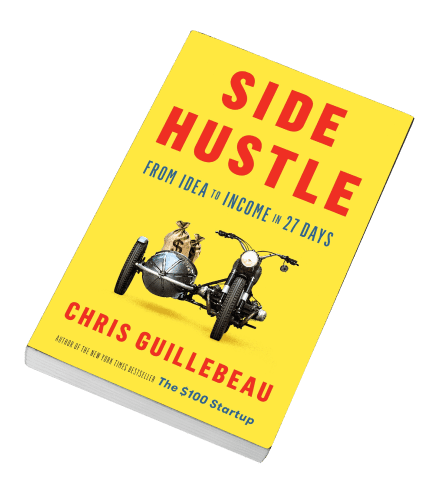
Side Hustle: From Idea to Income in 27 Days

The step-by-step guide behind many of the stories on this show. Find your idea, validate it, and start earning — no experience required.

See all books →

Keep in Touch

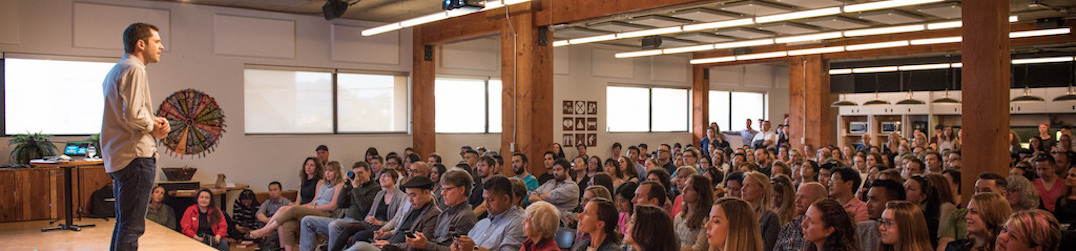
Chris Guillebeau speaking to a packed crowd

There's a new story every single day on Side Hustle School. Episodes are produced to be short and to the point — I know you're busy. Be sure you subscribe to get a weekly recap of each episode!

Email hello@chrisguillebeau.com
Say Hi From your favorite airport

To infinity and beyond,
Chris Guillebeau