This transcript was generated from the episode audio and may contain minor errors.
[Music]
Beware the Ides of June, episode 3,088, coming to you live from podcast headquarters, weekend workshop, Look for Money, Lying Under a Rock. This new segment is about helping you learn the key steps to a new side hustle, one step or concept per week. It includes activities, examples, and more. And of course it's all free. Today's topic, How to Look for Money, Lying Under a Rock.
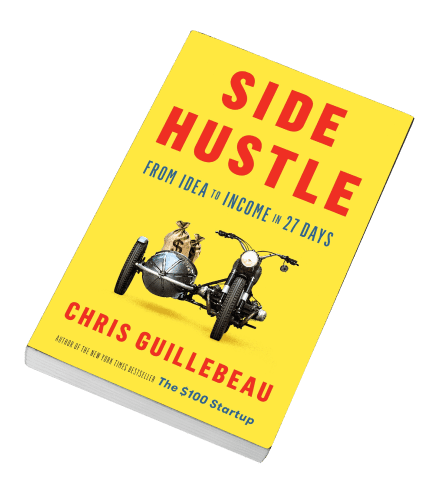
Now for this segment, we're using the book, Side Hustle, From Idea to Income in 27 Days. That's available wherever books are sold. Today's learning objective, learn how to expand your business by identifying natural extensions of what's already working. And I use this analogy of looking for money, lying under a rock, because there are some theories of business that kind of indicate you should just do one thing and you should remain like laser focused on this thing. You should not become distracted.
And there's certainly a place for that sometimes. But also if you're just kind of going along and you have this business or side hustle and you see something that would be a pretty obvious thing you could do to bring in more money and it doesn't actually distract you too much or deter you from your core mission, why not do that thing, right? Like if there's money lying under a rock. So to give you a couple of examples, Trevor Mountcastle wrote about him in the book. He discovered this principle almost by accident.
As a government analyst, he started buying gift cards to earn airline miles. I used to do that a bit myself. It's called manufactured spend. There's a whole little sub industry of it. And Trevor would use these cards to purchase electronics, which he would then resell at a similar price.
In this case, his goal wasn't profit. He was just trying to get miles and points. He just wanted to break even, but something unexpected happened along the way. He started noticing price differences between different marketplaces. An item selling for $80 in one place, like one store might fetch $120 on Amazon.
And so by carefully tracking these disparities, he could buy low and sell high, which is the goal of any reseller, right? Sometimes making significant profits beyond the travel points. And so then he was like, maybe instead of just making points, I can actually make money. So what began as this simple side project to get his miles evolved into a sophisticated arbitrage operation. And before long, he was actually earning more than $100,000 a year from the business, all while maintaining his day job.
As I said, he's a government employee. And then he was also traveling around the world during his free time or his vacation days from all those points he was accumulating. And he would do that in business class or first class. So he had this cool thing going. And the key insight is that business expansion doesn't always mean creating something entirely new.
Trevor saw money lying under a rock, basically. He discovered this opportunity. And often the best opportunities are variations or extensions of what is already working for us. These adjacent opportunities typically have lower risk because they also build on systems and knowledge that you already possess. So there might be something that you could do.
There might be something in your life where you're like, hey, there's actually not a real opportunity here. What can I do to take advantage of that? So let's take a quick little break, say big thanks to our sponsor. When we return, what can you do practically to expand your offers? How do you actually go from looking for money to turning over the rock?
I suppose that's the next logical step. So let's break it down. [Music]
All right, part two, expanding your offering. There are actually several ways to find these money under a rock opportunities. So we can start by thinking of Trevor's example.
What does that signify? I'll give you three of them here. There's probably more, but let's just go with three. Horizontal expansion is your first one. Horizontal expansion involves offering more versions of what you already sell.
So if you teach Spanish classes, for example, or if you've built some system for teaching Spanish, you might add another language, French or Italian. Even if you don't speak that language, presumably you have created the actual system or the method of learning or the platform or the app or whatever form of instruction it is. Basically it's like, I'm gonna go from one language to other languages. If you make custom wooden signs, we had a story in the book of a guy who was all about Pennsylvania signs. And he built like a pretty decent business around that.
But then he was like, hmm, maybe there are actually other States, like potentially 49 other States. So if you make custom wooden signs for one area, right? You could expand to other States or countries, of course. That's horizontal expansion. Vertical integration, or I guess you could say expansion as well, means moving up or down your supply chain.
So a jewelry maker might start selling supplies to other crafters. A graphic designer might offer printing services in addition to design work. And with all these things, as I said, you don't necessarily want to get distracted. Presumably there is some core competency that you have. You have built this side hustle in a way that takes advantage of something you're good at.
But might there be something logical, like completely logical that does not take too much of your time and actually brings in more money. So horizontal expansion, number one, and vertical integration, number two. And then number three, premium versions. Premium versions let you serve customers willing to pay more for enhanced service. So whatever service you're offering, let's say you are a freelancer or service provider, you've got your basic lawn care service.
Well, what if you add a premium estate package with additional landscaping features? Okay, and this is just one example. If you're not out there mowing lawns, there's probably something that you do. You can think, okay, this is my basic service. What is the premium service?
How can I offer additional value to my existing customers and clients? Most of them probably won't want it, but if a certain percentage of them do, then I'm able to boost my income. You can kind of work it out and play with the numbers. And this is really fun to do. So once you're in a place where your business is up and running, even at a small level, there's often an opportunity, at least one out there, that you can kind of uncover and play around with.
So your action exercise for the week, because every weekend workshop includes an action exercise, this one is to look at your current business or side hustle and list potential expansions. You don't actually have to do these things. You can just kind of identify what they are. Ask yourself, what related products or services could you offer? Are there premium versions of your current offerings, either existing or ones that you could create?
And here's a good one. What do customers typically buy before or after purchasing from you? So that actually might clue you into a whole other thought process. What do they buy before or after purchasing from you? What do they need?
What is the step that they go through before they come to you or the step afterwards? Maybe that gives you an idea about horizontal expansion, vertical integration, a premium version, or something entirely different. And as I mentioned briefly in the introduction, as I say in the book, if you see money lying under a rock, I tend to think, why not pick it up, all right? The easiest way to grow isn't always to find new customers. Sometimes it's offering more to the customers you already have, or doing what Trevor did and realizing, hey, I'm trying to get miles and points here to be able to travel, but actually I can make money as well.
Not a bad thing to consider. And as always, it's better to have a simple idea. You can start right away than a brilliant idea that never launches. That's my suggestion for you today. Thank you so much for listening.
Thanks for being part of this community. I'm excited to make the podcast for you every single day. It's always free. Find it wherever you get your podcasts. My name's Chris Guillebeau.
This is "Side Hustle School." [Music]
from The Onward Project.