This transcript was generated from the episode audio and may contain minor errors.
[Music]
All right, let's talk about creating an origin story. Welcome friends, welcome to a new segment we call Weekend Workshop. We're doing this all throughout 2025. It's about helping you learn the key steps to a new side hustle, one step or concept per week. It includes activities, examples, and more.
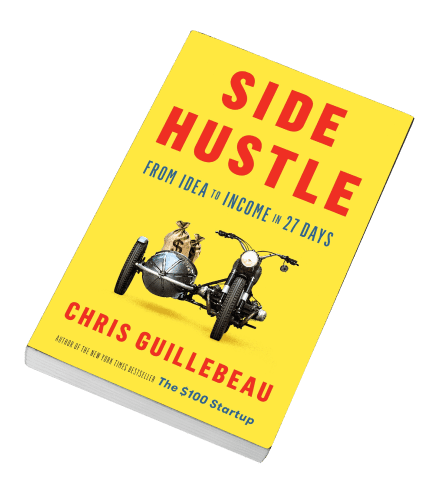
Of course, it's all free. We are using the book "Side Hustle" from idea to income in 27 days as our text. That book is available wherever books are sold, including an audio version, but also ebook, and then also old school, traditional hardcover book. That's how books used to be, and now we got all these different formats. Anyway, you can work with any format, and I'm gonna take you through the key steps along with some listener stories and examples as noted.
Today's episode comes from day 10, which is all about creating a powerful origin story. All right, this is just so important in terms of creating a new business or an idea or getting it out to the world. You want to have some kind of narrative. Ideally, a compelling narrative about your business that helps customers connect with and trust your offering. A great way to see origin stories these days, if you go to the supermarket and all of the new brands that have launched in recent years from fancy peanut butter to any kind of crackers or pretty much anything that's on all the shelves, you'll see this beautiful logo and this nice design.
Pick up the jar, the box, whatever it is, and turn it around, and on the back, they've got the ingredients list, of course, like they have to, but then there's always a story. There's always like so-and-so back when I was growing up, my dad used to do this, and now me and my sister, now we sell this, you know, it's almost a bit of a trope at this point, at least in terms of that industry, but the reason why they all do that is because they know it's important. It is a key reason for their success. You could also think about local restaurants that you love. They often have their own stories as well.
It's Grandma Maria's recipes that she brought from Sicily in 1947, you know, whatever it is, the stories matter because they help us connect with the business on a human level. So just to be clear, your origin story doesn't need to be dramatic or extraordinary. You don't need to have that 30-year, 50-year, 100-plus-year history. It just really needs to be authentic and help people understand why you started this business, what problem you're trying to solve, why customers should trust you, and what makes your approach different, all right? So there's this mission to it, and the mission is a little bit about you, but it's mostly about the customer, okay?
So consider a couple of different ways of presenting the same business. Let's talk about something that's not in the food industry. What about selling leather wallets, all right? You're gonna sell handcrafted leather wallets online. Well, that is the basic description of what you're doing, but maybe an origin story is something like, you know, after years of replacing cheap wallets that fell apart, I decided to learn leatherworking.
So I spent my weekends studying with an old school craftsman who taught me the traditional techniques that make leather goods last for decades. Now I create wallets that get better with age using the same methods that craftsmen have relied on for generations. Okay, so you see there, like the second version, helps customers understand not just what you sell, but why they should care, and also why they should be prepared to pay a premium for this product. It's not a cheap wallet. It's a wallet that's gonna last for years.
It's gonna get better with age, all right? So hopefully you get the idea there, but let's take a quick break. When we return, part two, crafting your story. How can you apply this directly to your next side hustle idea? [Music]
Your origin story becomes a powerful tool for connecting with customers and differentiating your business.
The key to creating this origin story is to focus on elements that matter to your ideal customer. Remember, we talked about your ideal customer a few segments back in this series. So the key elements to include are your catalyst, your mission, and your approach. So the catalyst is how did you get going with this? Like what problem did you notice?
What inspired you to take action? Why do you care about solving this? Your mission is what are you trying to achieve? What are you trying to achieve? Who are you trying to help?
What change do you want to create? How will transformation occur? Which leads to the last part, your approach. What makes your solution different? What unique perspective do you bring and why should people trust you?
And if you can kind of encapsulate all these things, or at least most of them in a short elevator pitch, then you are well on your way to crafting your origin story. And your action exercise for this week, not surprisingly, is to do just that, to write your origin story by answering a few questions, all right? And we've already talked about these a bit. What frustration or opportunity led you to start? Why are you uniquely qualified or motivated to solve this problem?
And what makes your approach different from others? So just do a few sentences. You don't have to go overboard with it. Just a few sentences or maybe a paragraph or two at most. Just do a little gut check afterwards and ask yourself, like, does this feel authentic?
Might it help customers understand why you're different? And does it build trust? Or does it at least have the potential to do so? Your origin story isn't just about you, even though it is about you, but it's also about helping customers understand why they should choose to work with you or buy from you. And last but not least, as I say every week in this segment, it's better to have a simple idea you can start right away than a brilliant idea that never launches.
Thank you for listening. I'll be back next week with the next version of this segment, of course, in between. New episodes coming out on the show every single day, always completely free. My name is Chris Guillebeau. You are listening to "Side Hustle School." [Music]
From the "Onward Project."