This transcript was generated from the episode audio and may contain minor errors.
Hey there, what's up? Thanks for tuning in today. We've got a caller today. Her name is Julie, one of our listeners, and she has a friend with a local art space. Now, Julie has been tasked with helping out in the department of marketing department, you know, loosely speaking, because it's a very small space, there are no staff. But Julie is trying to, you know, help her friend
get more business essentially, and maybe even create more of a sustainable business through the form of recurring revenue, I believe in the model of a subscription. Okay, so Julie is going to share one of her ideas with us and see if I can offer any helpful feedback. And as a reminder, these questions are kind of a proxy for our global audience who have all sorts of ideas and working on all kinds of projects. So when you hear these ideas and questions, you might not be into, you know, producing local events, or you might not be into wine or whatever else I've been talking about recently. But the goal here is to kind of strengthen your ability to analyze an idea, also to generate more ideas in the first place, but then to look at that idea and consider, you know, is it feasible?
Is it profitable? Is it timely? You know, of all the different ideas you might have, why is this one, you know, one of the better ones? Or is it in the first place? If you can improve this skill, it will help you for life. So let's talk about it. Will this all you can craft event venue subscription
work? That's the question, the detailed version and my answer coming up in just 30 seconds. Hi there, Chris. This is Julie. I've been listening to Side Hustle School since like episode one.
A friend of mine has started a small art space where she hosts pottery classes. And each class brings in a few students, but it's been slow going so far. There are also a few teachers there, most of whom are new or just doing a part time. Since I have a day job in marketing, I've been trying to think of ways to help. And one of my ideas is to offer like an all you can craft subscription, where students pay a monthly fee and get access to all sorts of different crafts.
It could keep them coming back, expose them to things they might not otherwise try, and provide a more predictable revenue stream for my friend. Do you think this is a good idea, though? If so, how should I bring it up a suggestion? I just I want to be helpful without trying to tell my friend what to do. Thank you so much, Chris.
Well, thank you so much, Julie. I'm so glad you're out there. And I'm glad you're trying to help your friend as to whether I think it's a good idea. I think it's an interesting idea. I think it could be a good idea. But rather than me just say like, Oh, it sounds like it's a good idea, or it's not,
what we need to do is get some data here. So, you know, a couple things we can do. One, you can, of course, just experiment, you can jump in and see what happens. But I think even better, like the main thing I would want to know on the front end is, what are some estimates, you know, like, what are some projections? Okay, and we can do this very simply, you know, what are some estimates of sign up numbers?
What kind of pool are we working with? Like, how many students are coming now for the, you know, the one off classes or the a la carte classes? That might give us some idea of what's possible, at least with the recurring model. Because if it's really small numbers, I don't know that that's the best route. I think if it's really small numbers, we need to just work on getting more people in the door in the first place. Also, you know, much of the time, moving to some
kind of subscription or recurring model is good, like for sure. But there's always a risk you end up hurting the single sign ups, you know, the one offs the a la carte. So that's why you need to run some numbers. And this can be done, as I said, very simply in a spreadsheet, really even just, you know, your journal or the back of a napkin. I'm a big fan of making these these quick and dirty projections. They often give you the info that you need in a short period of time.
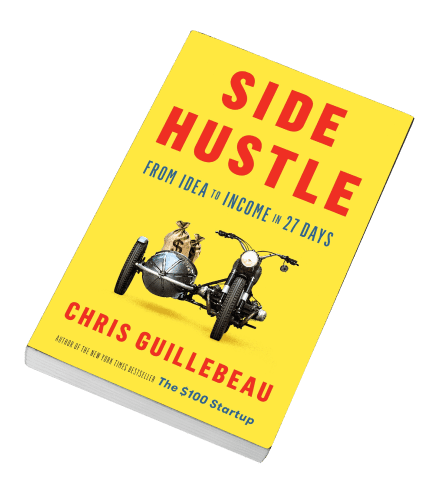
So if you have a copy of the side hustle book, you can register it at side hustle school calm, you'll get a free backup napkin spreadsheet template, where you just kind of plug in the various numbers, the variables and it gives you an idea, you know, of whether this is worth pursuing or not. But whether you go that route, or you just kind of sit down with your friend and say, you know, if we if we try this kind of revenue model, what do we think could happen? Like we might not know until we actually put that plan into action. But based on the people who are coming in so far, based on what we think we could charge, you know, for the model, it's very likely that information will give you a hunch one way or another, whether it's worth moving to the experiment or not. But I think even before you get to that point, you take your idea, you apply some analysis to it, and you see how it holds up. So that's my two cents for you, Julie, I hope it works out for
you and your friend. Let us know. And listeners, if you've got a question, come to side hustle school comm slash questions, we will continue to feature them. I love knowing what you're working on. Let me know how I can help. I'm always happy to publicize projects as well. So let me know what
you're doing and we can share it with our community. And of course, subscribe or follow come back tomorrow for a new episode every single day. My name is Chris Guillebeau. This is side hustle school. From the onward project.