1089 7:08

Boy Scout Merit Badge Leads to Leatherworking Lifestyle

A leatherworker turns a love for his adoptive state into a viable business, selling handmade luxury pens and leather accessories.

7:08

Subscribe Now For A Free Five Step Tutorial

Get a free five-part email course that shows you how to find, validate, and launch your side hustle idea — no experience required.

What It's About

A successful leatherworking hustle inspired by a former Boy Scout's experience and love for his state.

Business Model
Arts & Crafts
Skills Required
Leatherwork & Marketing
Complexity
Medium
Profit Potential
Medium

Words of Wisdom

Looking to do a similar hustle? Chris recommends finding "someone who can mentor you, both in the business aspects and the creative. Do an apprenticeship with someone who is doing what you want to do, and make sure it's something you're comfortable doing all day, everyday because it won't be your hobby anymore."

Fun Fact

Chris had to buy another wood lathe after his first one died in an electrical storm. Look out for hazards!

Notes from Chris

Episode 1089
Chris Cavallari has been making luxury pens and leather accessories since 2016. These pens are classy and handmade, carved from hardwood, with beautiful wavy designs in multiple colors. The leather accessories include cuff bracelets, wallets, and notebook covers. They’re tough and beautiful, looking like something a woodsman from Maine would carry.

As a longtime pen collector, at some point Chris got hooked on making his own. He didn't plan to turn this into a business, or even a side hustle—at first he was just looking for a hobby.

For some reason, he thought he’d have more time to learn a new trade and revisit his love of leathermaking, in which he’d first earned a Boy Scout merit badge, just as his son was born. Maybe that was his first mistake… but fortunately it turned out well in the end.

He started with just $600. It covered the basic leatherworking tools, pen blanks, pen hardware kits, and a side of leather.

He sold his first pens to family members in January 2017, just a few months after he started producing stock. Chris’s mom used several of them as gifts for friends, who ended up ordering some of their own. Then, his wife brought some of his pens to work, and he got a few more orders.

The leatherworking happened in a similar fashion. Chris started by making products for himself, things he'd wanted to use. It began with a notebook cover. Then, when he needed a new wallet, he made one. People noticed, asked him where he got them, and he had himself more orders.

Although he hadn't started with the intent to sell, there was a demand for what he was making. So he set up a store on Etsy, calling it The Acadian, and slowly began making sales to strangers.

From there, Chris set incremental goals for himself. The first was to earn $1,000 in a month. Then he upped that to $3,000. That's how he approached everything: slow, gradual improvements rather than trying to find a secret growth hack.

In 2017, its first year, The Acadian made $4,000. Not bad for something that had just started as a hobby.

But the biggest change for The Acadian happened in January of 2019, when Chris was laid off from his day job. Suddenly, this thing that had been a hobby and a way to make extra money had become his only source of income.

It was time to get serious. Chris wasn't a fan of the control that Etsy exerted over his platform, so he made his own store on Shopify.

He went from a narrow focus on pens and items he used himself to a broader offering. That scope includes belts, bracelets, money clips, combs, and more. All with the same careful attention to detail and rugged aesthetic as when the company started.

Remember how he made $4,000 in its first year? Now, in 2019, in its third year, he’s now set to make over $20,000.

But it's about more than the money. At its core, The Acadian is a love letter to Maine and its rugged, adventurous culture.

Chris has big plans for 2020. Now that it's his full-time gig, he's going to give it the attention it deserves. He plans to work from a dedicated space, whether that's renting a workshop or building one on his property. Next will be hiring an employee to help with processing large orders.

And it all started with a merit badge.


MENTIONED IN THIS EPISODE:
  • The Acadian: Check out Chris's online store and products at his website.
  • Chris credits the Pen Turners Association and Leatherworker.net as resources that helped him.
  • Chris uses Shopify to sell his work. (use the link to start a 21-day trial and get 10% off for an entire year!)
  • Looking to sell your artwork or products? Check out online marketplaces like Etsy, Amazon's Handmade.
 

SEE ALSO: Inspiration is good; inspiration combined with action is better. Now get back to work!

Yours in the revolution,

cg-sig-newsletter
Quote of the Day
"Not all online videos and techniques are good—or even safe—but you can usually tell who knows what they're doing and who doesn't."
—Chris Cavallari #SideHustleSchool
Read the full transcript

This transcript was generated from the episode audio and may contain minor errors.

Hello everyone, and Merry Christmas to all! Wishing you a joyous season, regardless of which holiday you celebrate or don't celebrate. Whatever you're into, I hope it is a refreshing time for you. And remember, the new year is right around the corner. Well, today's story is about a leatherworker who turns a love for his adoptive state — that would be the state of Maine — into a viable business.

Selling handmade luxury pins and leather accessories. Now, in some ways, it follows a fairly common narrative of an artisan or maker who pursues a hobby, only to realize that it might also be a hustle. So we will examine that narrative a bit, see what it might have in common for you, or perhaps someone you know, or perhaps just a thought process that you can apply in your own way. And when this leatherworker finds himself in need of relying on an outside source of income, well, conveniently, he's already got it wrapped up under the tree. Actually, there's not really any Christmas reference to it, I just thought I would throw that in.

He's got it wrapped up under the tree. Okay, well, it all begins with a Boy Scout Merit Badge. That actually is part of the story. And I guess you never know when those things will turn out to be useful. I'm still waiting to find an application for my Boy Scout Arsenist Badge.

Actually, now that I think about it, I never got the badge for that, but I was a Boy Scout Arsenist. So that's a story for another day. We'll have to save that one. For now, Boy Scout Merit Badge leads to leatherworking lifestyle. That's today's story, and it's coming right up.

Chris Cavallari has been making luxury pins and leather accessories since 2016. These pins are classy and handmade, carved from hardwood, with beautiful wavy designs in multiple colors. The leather accessories include cuff bracelets, wallets, and notebook covers. They're tough and beautiful, and they look like something a woodsman from Maine would carry. As a longtime pin collector, at some point Chris got hooked on making his own.

He didn't plan to turn it into a business, or even a hustle. At first, he was just looking for a hobby. For some reason, he thought he'd have more time to learn a new trade and revisit his love of leathermaking, in which he had first earned a Boy Scout Merit Badge, just as his son was born. Maybe that was his first mistake, thinking he'd have all that extra time, but fortunately it turned out well in the end. $600 covered the basic leatherworking tools, pin blanks, pin hardware kits, and a side of leather.

He sold his first pins to family. Chris's mom used several of them as gifts for friends, who ended up ordering some of their own. Then, his wife brought some of the pins to work, and he got a few more orders. The leatherworking happened in a similar fashion. Chris started by making products for himself, things he would want to use.

It began with a notebook cover. Then, when he needed a new wallet, he made one. People noticed, asked him where he got it, and he had himself more orders. Although he hadn't started up with the intent to sell, it was clear there was a demand for what he was making. So, he set up a store on Etsy, calling it the Acadian, and slowly began making sales to strangers.

From there, Chris set a series of incremental goals. The first was to earn $1,000 in a month, then he upped that to $3,000 total. That's how he approached everything, slow, gradual improvements, rather than trying to find a secret growth hack. At the end of its first year, the Acadian had brought in $4,000. Not bad for something that had just started as a hobby.

After that small success, he reached out to the main small business development center, who hooked him up with a mentor. But it wasn't just a single mentor who helped him learn. As Chris's business evolved, the internet itself was a great source of knowledge and inspiration. Instead of watching music videos or comedy clips, Chris used YouTube to learn more about his trade. He learned about the tools he needed to up his game and slowly acquired them as his side hustle grew.

In particular, he credits the Pin-Turners Association and Leatherworker.net as resources that were particularly helpful. But the biggest change of all happened in January 2019, when Chris was laid off from his day job. Suddenly, that thing that had been a hobby and a way to make extra money had now become his main source of income. It was time to get serious. Chris wasn't a fan of the control that Etsy exerted over his platform, so he made his own store on Shopify.

He went from a narrow focus on pins and items he used himself to a broader offering. That scope includes belts, bracelets, money clips, combs, and more. All made with the same careful attention to detail and rugged aesthetic. Chris slowly added to his collection of tools, buying things like chisels and leather needles, as he offered more and more products. It culminated in his largest purchase to date, an industrial leather sewing machine.

There's no better representation of the Akkadian's growth since Chris was laid off. Except maybe for the income. Remember how he made $4,000 at the end of the first year? Now in 2019, his third year, he's set to make over $20,000. And of course, it's about more than the money.

At its core, the Akkadian is a love letter to Maine and its rugged, adventurous culture. Chris has big plans for 2020. Just like me. Good job, Chris. This is Chris also.

He's a full-time gig, he's going to give it the attention it deserves. He plans to work from a dedicated space, whether that's renting a workshop or building one on his property. And next, we'll be hiring an employee to help with processing large orders. He plans to work from a dedicated space, whether that's renting a workshop or building one on his property. He wants to see how far he can take it.

The future is bright and rugged. And it all started long ago with a Boy Scout Merit badge. So, what is that formula? That artisanal maker narrative that I mentioned? Well, it kind of starts somewhat organically.

This is a common thread of a lot of stories. It's somebody who wants to do something new. In this case, he's looking for a hobby. So he goes back to this, you know, long ago passion from his Boy Scout days, starts doing more leatherworking, starts making pins, gives them to his family or sells them to his family. Very enterprising.

Respect that. And, you know, from there, it's like people are asking about them. And he thinks maybe I could sell these, you know, through Etsy, which is a really simple platform. Anybody can set up a shop on Etsy an hour or less. And it's great for that purpose because you can start getting information right away.

You can get information, leads, inquiries, questions, sales, you know, I mean, that's the ultimate goal. But even if people aren't buying, you still get some information that way. And then from there, he does it for a while, just kind of on the side until he has this layoff and that presents the opportunity to go all in. Now, if he had been laid off from the job and hadn't put in the whatever it was two years or so working as a side hustle, he would be that much further behind. But because he had laid that foundation, learned a lot about product development, you know, begun to learn more about sales and such, then he was able to really grow from whatever it was, I think $4,000 to $20,000.

And of course, now that it's his main focus, hopefully it will grow far beyond that as well. But again, a key point is to lay that foundation before you need it. So glad he did that. We will link it up on the show notes page, of course. That page is sidehustleschool.com/1089, a special Christmas episode, Christmas 2019.

Inspiration is good, but inspiration with action is better. Thank you so much for listening, my friends. Happy holidays. Once again, I'll be back again tomorrow. My name is Chris Guillebeau for Side Hustle School.

From the Onward Project.

Find your side hustle

Search 450 real case studies by income, difficulty, and business model. The Side Hustle Finder helps you skip the browsing and find ideas that actually match your situation.

Explore the Finder →
Side Hustle book
From the Host

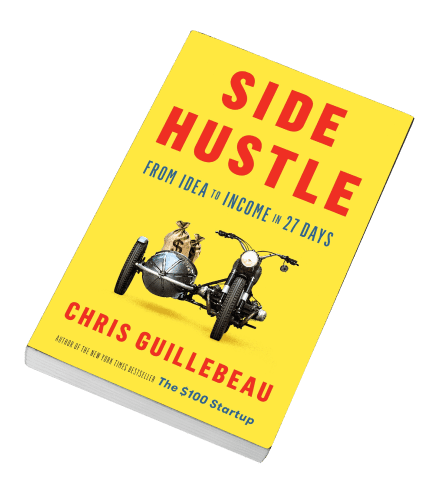
Side Hustle: From Idea to Income in 27 Days

The step-by-step guide behind many of the stories on this show. Find your idea, validate it, and start earning — no experience required.

See all books →

Keep in Touch

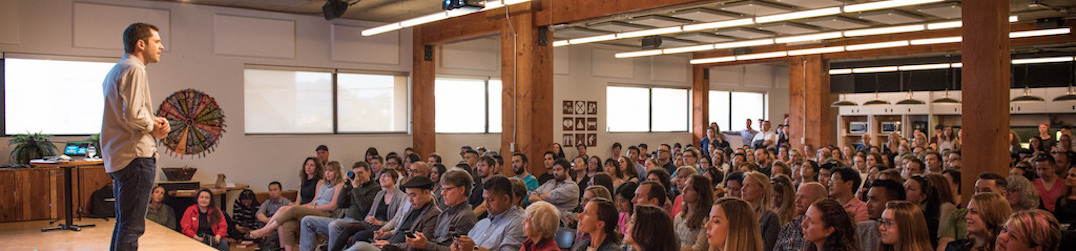
Chris Guillebeau speaking to a packed crowd

There's a new story every single day on Side Hustle School. Episodes are produced to be short and to the point — I know you're busy. Be sure you subscribe to get a weekly recap of each episode!

Email hello@chrisguillebeau.com
Say Hi From your favorite airport

To infinity and beyond,
Chris Guillebeau