1078 7:40

Student Bytes Into Lucrative Web Host Biz

A college student launches a web hosting side hustle that goes on to serve more than 30,000 clients.

7:40

Subscribe Now For A Free Five Step Tutorial

Get a free five-part email course that shows you how to find, validate, and launch your side hustle idea — no experience required.

What It's About

A college student builds a six-figure web hosting business from his dorm room.

Business Model
Service
Skills Required
IT & Marketing
Complexity
Low
Profit Potential
High

Words of Wisdom

For many, starting a side hustle is about becoming your own boss and having more freedom and control. Corey share's an interesting perspective when you start scaling your company, “I'd say "not having a boss” has been one of the best parts, but that's not true. My first company had around 30,000 bosses (clients).”

Fun Fact

Playing in a band during college, Corey befriended many of the venue owners and local bands who he provided hosting services for. He calls his journey with Ubiquity his own version of becoming a rock star.

Notes from Chris

Episode 1078
While getting his degree in systems analysis at Illinois State University, Corey Northcutt found a way to combine his talents with his interests. The idea began organically ... he liked building websites and he had a friend who used the Linux operating system. Without much thought, they decided that they could combine the two.

Let’s talk very briefly about web hosting. To publicly share a website (make it to where someone else can visit), you need a web host, where your web pages and other content can live. Corey realized that people were paying faceless corporations to host their hopes and dreams, which was a bit scary. In response, he and his friend decided to offer them a better experience.

The pair decided on the name Ubiquity. It seemed fitting—by creating things to put on the internet, where they would be available anywhere and everywhere. Setting up the actual hosting part was easy, as it had a low startup cost and required few resources beyond their own experience in programming. All they needed was $60 per month for a virtual private server and PayPal fees.

What happened next is what Corey calls “a series of fortunate accidents.” With no business plan, Corey decided he would try using Ubiquity to make some extra cash as a student. He spent time on forums, absorbing knowledge from others who were offering web hosting. Though he had learned some concepts from his IT degree, he had to apply them in a way that was more useful through a process of hands-on learning.

After a few more coffee shop clients, as well as a number of bands he and his friend signed up since they were both musicians, they found themselves attracting people through web searches. Since Ubiquity had no budget for advertising, they worked especially hard on their SEO.

Eventually, they moved on to higher-paying clients, discovering that charging $500 per month for the rental of an entire server was the most profitable and successful plan. As a result, they raised their rates, focusing on delivering a premium product that helped them stand out.

Five years in, Corey sold Ubiquity to his partners. After cashing out, he told himself he’d just sit on a beach and build his own sites. That didn’t last long—two weeks to be exact—as he was approached to do consulting for someone he considered a mentor in his previous business. Within a year, he had created an entirely new company, Northcutt, that focuses on SEO for e-commerce brands.

He is able to look back on this first side hustle as how he got his start. He bootstrapped that business from the ground up, his dorm room, and that local coffee shop.


MENTIONED IN THIS EPISODE:
  • Corey has since sold his web hosting business (Ubiquity) and now focuses on SEO for e-commerce brands. Learn more about his new venture at Northcutt.com.

 

SEE ALSO: Inspiration is good; inspiration combined with action is better. Now get back to work!

Yours in the revolution,

cg-sig-newsletter
Quote of the Day
"I'd say "not having a boss” has been one of the best parts, but that's not true. My first company had around 30,000 bosses (clients)."
—Corey Northcutt #SideHustleSchool
Read the full transcript

This transcript was generated from the episode audio and may contain minor errors.

[Music]

In today's story, a college student launches a web hosting business that goes on to serve more than 30,000 clients. He does it just to make some extra cash. Well, at first he just does it 'cause it's fun. Then it turns into this side hustle and then it grows into this business. And his whole model of doing web hosting really is a simple business opportunity for someone who is tech savvy.

It's not a good fit for everybody, but for someone who's tech savvy, especially because many larger web hosts offer a reselling option where you are essentially leasing their server and then subleasing space to customers. We'll talk a bit about that in the story. And also if you need a basic website, we have our own partner offer here on the program that starts at just $4 a month. Hundreds of our listeners, in fact, have taken advantage of this low-cost, easy to set up deal. You can check it out at sidehustleschool.com/website.

Now, speaking of deals, here's a message from our sponsor. Before we begin, student bites into lucrative web host biz. Stay tuned. It's all coming right up. [Music]

While getting his degree in systems analysis at Illinois State University, Corey Northcutt found a way to combine his talents with his interests.

The idea began organically. He liked building websites and he had a friend who used the Linux operating system. Without much thought, they decided they could combine the two. Now let's talk very briefly about web hosting. To publicly share a website, make it to where someone else can visit, you need a web host where your web pages and other content can live.

Corey realized that people were paying faceless corporations to host their hopes and dreams, which was a bit scary. So in response, he and his friend decided to offer a better experience. The pair decided on the name Ubiquity, which seemed fitting because creators would put something online where they could be available anywhere and everywhere. Setting up the actual hosting part was easy as it had a low startup cost and required few resources beyond their own experience in programming. All they needed was $60 a month for a virtual private server and PayPal fees.

Corey describes what happened next as a series of fortunate accidents. With no business plan, he decided he would try using Ubiquity to make some extra cash as a student. He spent time on forums, absorbing knowledge from others who were offering web hosting. Though he had learned some concepts from his IT degree, he had to apply them in a way that was more useful through a process of hands-on learning. When it came to pricing, he looked at what other sites were charging and decided on a price that seemed fair, a process he calls unscientific and would sometimes even change by the hour.

He remembers finding their first client in a coffee shop. What he thought of as loitering, also known as spending time there on his laptop, resulted in a worthwhile connection as the coffee shop owners purchased a low-cost hosting account. To him, that was all he expected would happen. A few folks would ask him to host their site. The fact that something much bigger might come of it wasn't even on his radar.

But after a few more coffee shop clients, as well as a number of bands he and his friends signed up since they were both musicians, they found themselves attracting people through web searches. Since Ubiquity had no budget for advertising, they worked especially hard on their SEO. Eventually, they moved on to higher paying clients, discovering that charging $500 a month for the rental of an entire server was the most profitable and successful plan. As a result, they raised their rates further, focusing on delivering a premium product that helped them stand out. In what seemed like another weird twist of fate, the more they charged, the more they seemed to be able to sell.

When Corey went full-time with Ubiquity two and a half years after its start, business was booming. He had around 30,000 clients and eventually split off into two brands, Ubiquity Hosting and Ubiquity Servers. With the hosting, they continued to offer regular web hosting and managed servers. On the server side, they offered enterprise solutions for bigger clients. The growth continued naturally and Ubiquity was met with a few challenges, such as outrunning their ability to buy hardware.

Additionally, they outgrew their original data centers and had about a dozen midnight migrations where they worked through the night to upgrade to others across town. Looking back, Corey recognizes that they went too wide with their offerings, rather than focusing on the initial service of web hosting that he started with. About five years in, Corey was able to sell Ubiquity to his partners. After cashing out, he told himself he'd just sit on a beach and build his own sites. That didn't last long, two weeks to be exact, as he was approached to do consulting for someone he considered a mentor in his previous business.

Within a year, he had started an entirely new company, Northcut, that focuses on SEO for e-commerce brands. He's now able to look back on his first side hustle and see where it all started. He bootstrapped that business from the ground up, his dorm room, and that local coffee shop. [Music]

So when you're thinking about what kind of business you wanna start, if you're a side hustle, you got limited time, you don't wanna spend a lot of money, or go into debt, if you don't know the first thing about web hosting, like what I'm talking about in this story, then you probably shouldn't start with it. Because in this business, you're responsible when something breaks, which can be extremely stressful.

Like I've been on the other side of it as a website owner, and my site goes down, and I'm like, what do I do? Well, I call my web host, but they don't have the answers, or I have to wait. It's just this really stressful kind of thing. However, on the upside, when it works, when the website doesn't go down, and you've got hundreds or thousands of customers paying every month, then that can be the ultimate passive income, which is why he was able to build that business to 30,000 clients, and then eventually cash out. So good for him.

And also, Corey's enterprise customers paid upwards of $500 a month, which they probably needed to do for their corporate needs. But as a reminder, you can get your site going for less than $5 a month. Check out that offer at sidehustleschool.com/website. Also, if you wanna see the show notes, including links to Corey's business, anything else that I talked about in the episode, those will be at sidehustleschool.com/1078. Episode 1,078.

Thanks so much for listening. I'll be back tomorrow with a weekly recap. Two weeks to go in 2019, and a bright future ahead next year. My name is Chris Guillebeau. This is Side Hustle School.

[Music]

From the Onward Project.

Find your side hustle

Search 450 real case studies by income, difficulty, and business model. The Side Hustle Finder helps you skip the browsing and find ideas that actually match your situation.

Explore the Finder →
Side Hustle book
From the Host

Side Hustle: From Idea to Income in 27 Days

The step-by-step guide behind many of the stories on this show. Find your idea, validate it, and start earning — no experience required.

See all books →

Keep in Touch

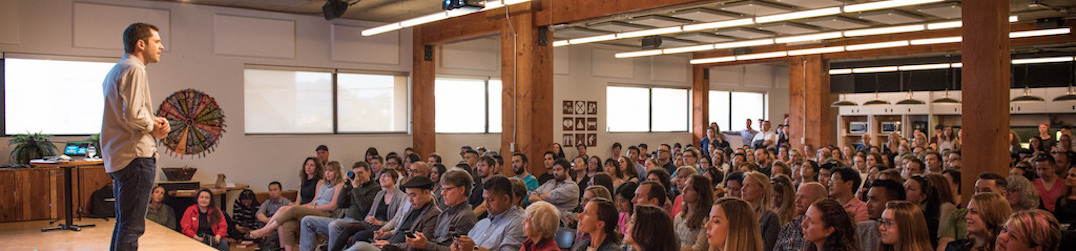
Chris Guillebeau speaking to a packed crowd

There's a new story every single day on Side Hustle School. Episodes are produced to be short and to the point — I know you're busy. Be sure you subscribe to get a weekly recap of each episode!

Email hello@chrisguillebeau.com
Say Hi From your favorite airport

To infinity and beyond,
Chris Guillebeau